Software Testing | AI | Quality
Software testing and AI
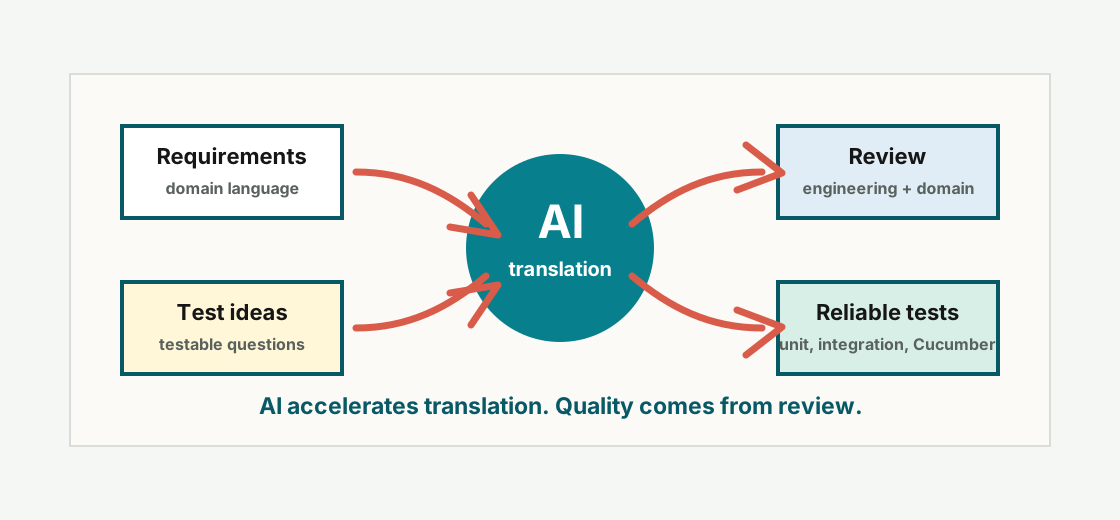
AI is not interesting in software testing because it replaces developers, testers, or domain experts. Its real value is more specific: AI can act as a translation tool between different levels of abstraction in the software development process.
More precisely, AI is useful here as a translation tool.
A software project rarely starts with code. It starts with a requirements document: domain expectations, constraints, assumptions, and desired behavior. This document is not yet a test strategy. It describes what should be true, but often not clearly enough how those statements should be verified.
From requirements to a test plan
The first important translation step is turning requirements into a software test plan. Domain statements become testable questions: Which cases need coverage? Which edge cases are critical? Which data is required? Which interfaces are involved? Where does a unit test end, and where does an integration test begin?
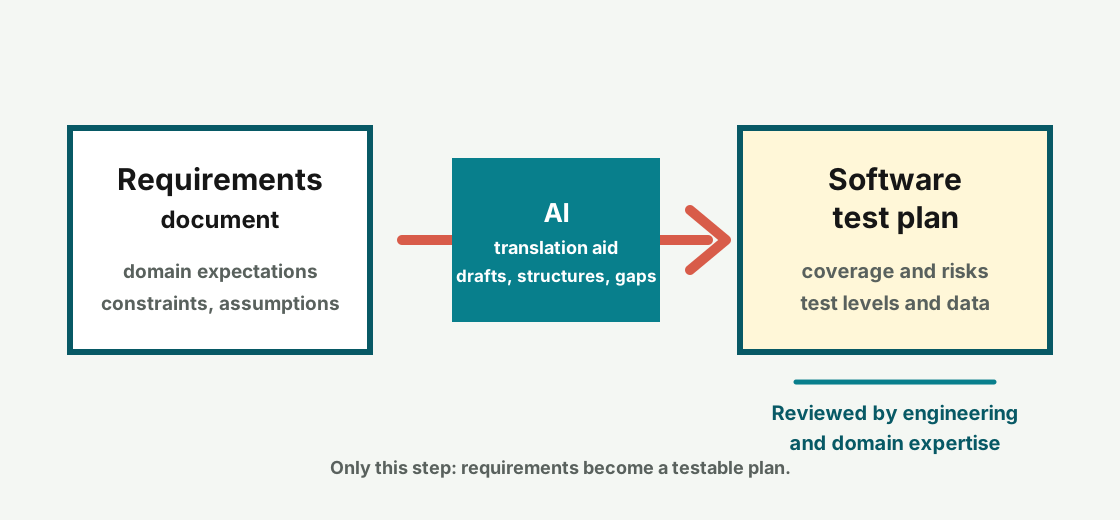
AI can support this step by structuring suggestions, exposing gaps, and turning an unwieldy requirements document into an initial testable structure. But that structure still needs technical and domain review. AI produces a draft, not responsibility.
From a test plan to concrete tests
The second translation step moves from a test plan to concrete tests. Depending on the level, different artifacts are created:
- Unit tests verify small, well-isolated units.
- Integration tests verify the interaction of components, databases, or interfaces.
- Cucumber tests describe domain behavior in a form that remains readable outside the development team.
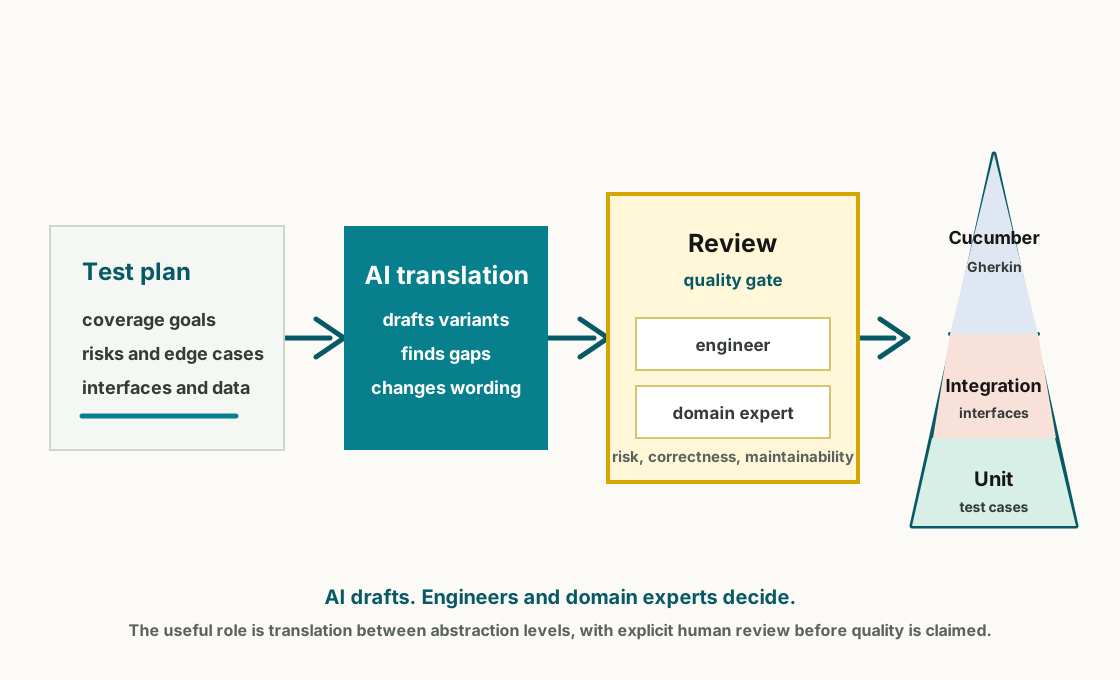
This is where AI can be productive: it can derive variants from test cases, formulate Gherkin scenarios, suggest missing edge cases, or make existing tests easier to read. It can also help move between a domain-level formulation and a technical test implementation.
The boundary: testing remains engineering
Software testing remains an engineering task. Good tests are not created by generating as many test cases as possible, but through precise selection: Which risks matter? Which defects would be expensive? Which tests are stable, maintainable, and understandable? Which assumptions are hidden in the requirement but not yet stated explicitly?
AI helps with translation. Evaluation remains human. In this role, AI is useful: it accelerates the path from requirements to test ideas and from test ideas to executable tests, while developers keep ownership of domain judgment, architecture, and quality standards.
Conclusion
The largest value of AI in software testing is not automatic test generation. It is the structured translation between requirements, test plans, and concrete unit, integration, and Cucumber tests. Used this way, AI adds speed without removing critical thinking from the process.